


The Complex Lattice Bose Group at the Institute of Quantum Electronics, Peking University, is one of the earliest teams in China to conduct research on Rubidium Bose-Einstein Condensates (BEC). Currently, the group focuses on the dynamics of ultracold Bose gases in optical lattices. Using precise control techniques, the team explores complex phenomena such as triangular/hexagonal lattice systems, high-band dynamics in shaken lattices, and cross-dimensional phase transitions. The main research directions include: multidimensional quantum phase transitions and correlation effects in optical lattice systems, novel quantum states and properties of low-dimensional and fractional-dimensional cold atomic gases, high-band dynamics and dimensionality control mechanisms, as well as non-equilibrium physics and topological effects in ultracold atomic systems. Through quantum simulation, the group aims to reveal the evolution laws of complex quantum systems and explore novel quantum effects in quantum matter, providing experimental and theoretical support for condensed matter physics, topological quantum physics, quantum information science, and quantum computing technologies.
Recent Main Work:
Exploring universal phase diagrams of dimensional crossovers using an atomic quantum simulator
By adiabatically loading a BEC into a three-dimensional triangular optical lattice that can be independently tuned in different directions, we constructed an interacting atomic quantum simulator with continuously tunable anisotropy and temperature, and explored the universal phase diagram of dimensional crossovers. At low temperatures, we determined the full phase diagram from the quantum 3D to 0D regions. By increasing the temperature, we observed that different quantum dimensional regions gradually disappear as the temperature rises, and we found a nontrivial thermal state region appearing between the quantum 0D and integer dimensions. Furthermore, we demonstrated that the quantum-to-thermal state transitions can be classified into four distinct typical universality classes depending on the dimension: BEC phase transition, BKT phase transition, TLL phase transition, and Mott melting. Surprisingly, we also discovered a fifth type, where a high-dimensional quantum system can reach the thermal phase by crossing a low-dimensional quantum region. We term this process, where the system crosses from a higher dimension to a lower dimension due to increased thermal fluctuations caused by rising temperatures, as TFDC (thermal fluctuation induced dimensional crossover). Our results provide an important foundation for understanding the projective condensed matter structures of unconventional dimensions.
àRelated publication: https://www.nature.com/articles/s41467-026-71881-3

Realization of a three-fold nematic superfluid
We observed that ultracold atoms in a honeycomb optical lattice form a superfluid that breaks the lattice rotational symmetry while maintaining lattice translational invariance. We named this novel state of quantum matter a three-fold nematic superfluid. A key quantum control technology in the experiment was the rapid loading of ultracold atoms into highly excited bands of the honeycomb optical lattice. Through high-precision and rapid control of the laser field, we achieved a breakthrough in the quantum control of high orbital degrees of freedom in optical lattices, successfully preparing high-band condensates in the honeycomb optical lattice. Based on this novel quantum simulation platform, experiments revealed that the system spontaneously forms a three-fold nematic superfluid. Meanwhile, theoretical analysis via field theory renormalization found that high-band condensates have significant differences from traditional condensates. There is a significant renormalization of many-body interactions in high-band condensates, and the renormalized interactions cause atoms in the lattice to tend to form orbital polarization with odd spatial parity. This complex many-body effect described by field theory is the microscopic physical mechanism for the formation of the nematic superfluid.
àRelated publication: Phys. Rev. Lett. 126, 035301 (2021)
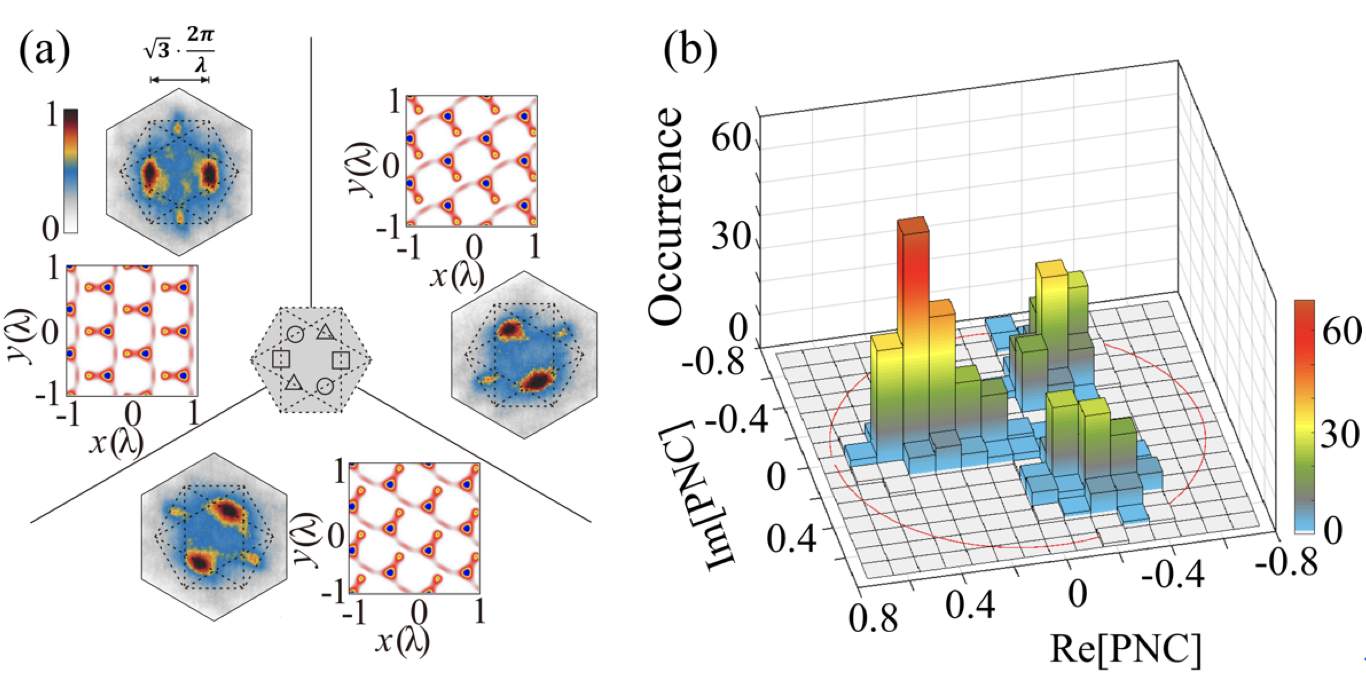
Figure 1. Left: Momentum-space distribution of the three-fold nematic quantum superfluid; Right: Statistical distribution.
Quantum sensing technology for two-dimensional electromagnetic forces
We have developed several original techniques for controlling the external states of cold atoms in optical lattices, enabling high-precision quantum control over quantum matter waves formed by hundreds of thousands of atoms. The experiment utilized the optical lattice to separate the real-space and momentum-space motion of matter waves, achieving control and measurement of the quantum matter wavevector. Simultaneously, Bragg scattering of matter waves in the optical lattice provided precise two-dimensional coordinates for calibrating the magnitude and direction of the matter wavevector. This quantum measurement technique can directly and accurately measure the wavevector accumulation of matter waves under the action of a force, without the need to measure changes in the spatial position of the atoms. This technology establishes a direct connection between force and Planck's constant via quantum matter waves, eliminating the need to calibrate physical quantities such as atomic mass, atom number, or atomic magnetic moment, and thereby avoiding the influence of measurement uncertainties associated with these quantities. In the experiment, the force-sensing sensitivity of the quantum matter waves reached 2E-26 N/√Hz, breaking the aforementioned standard quantum limit by nearly an order of magnitude. The team performed thousands of repeated quantum matter wave experiments, completing the measurement of an extremely weak force. Statistical analysis of the large-scale data showed a measurement precision of 2E-28 N, which is equivalent to the strength of van der Waals forces between atoms at the millimeter scale.
àRelated publication: Science Bulletin 67, 2291 (2022) (Cover Article)
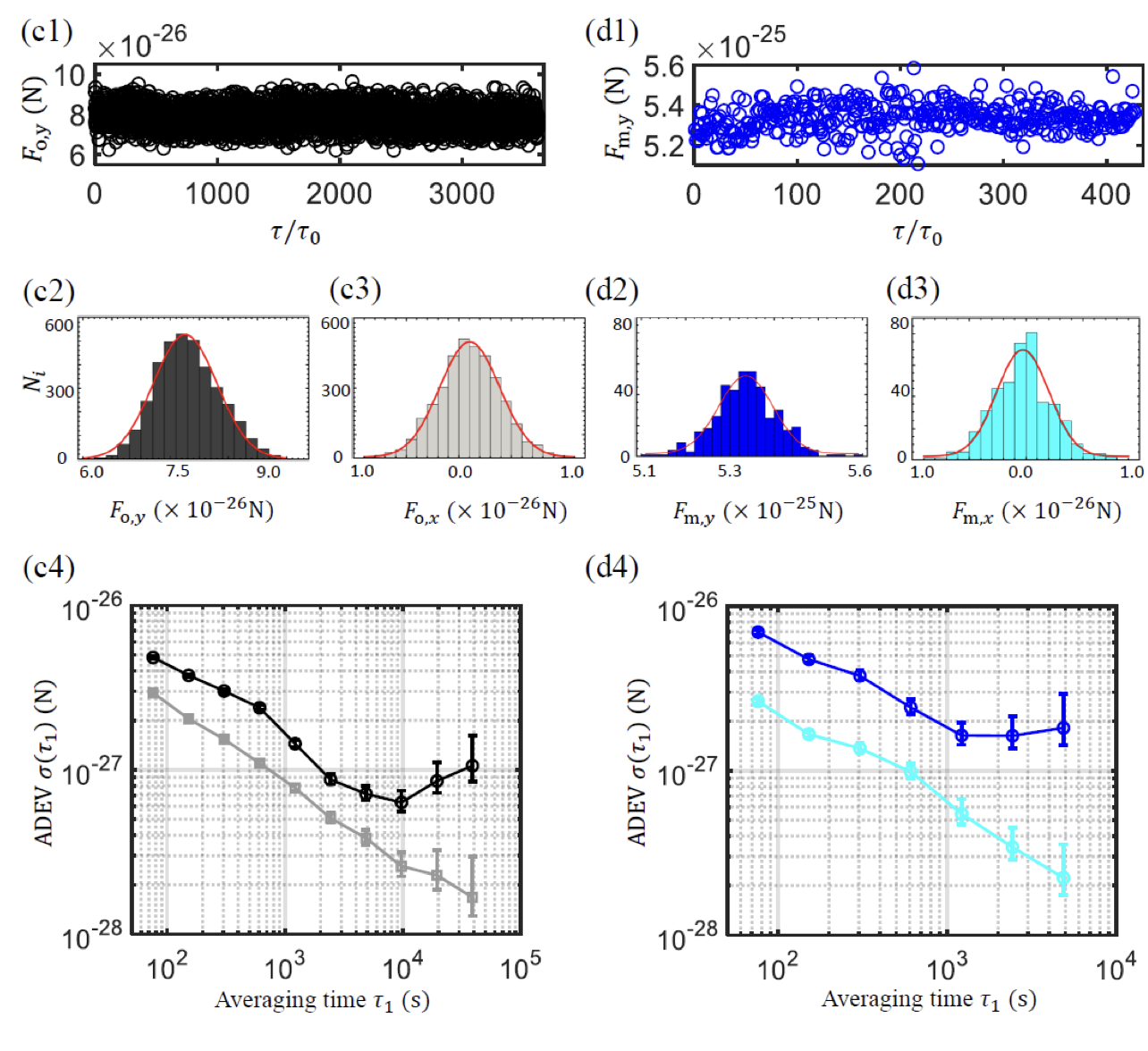
Figure 2. Measurement results of the two-dimensional electromagnetic force.
Realization of quantum gates with atomic orbitals
For the first time experimentally, we utilized the S and D bands of a one-dimensional optical lattice as the 1 and 0 states of a qubit, respectively, and on this basis, we realized a single-qubit nonadiabatic universal quantum gate based on atomic orbitals. In the experiment, to ensure that the atoms evolve solely in the S and D bands, we used an amplitude modulation (shaking) technique for the optical lattice trap depth, ensuring parity invariance during the experiment to suppress atomic transitions to the P band. Simultaneously, by using an orbital leakage elimination method, we greatly reduced the probability of atoms leaking into the G band. The finally obtained sequence of sine pulses realized single-qubit X, Y, Z, H, and π/8 gates, with an average quantum process fidelity of 98.36%. In the future, combined with single-site manipulation technology, it is expected to realize arbitrary quantum computation on orbital qubits.
àRelated publication: Phys. Rev. A 104, L060601 (2021)
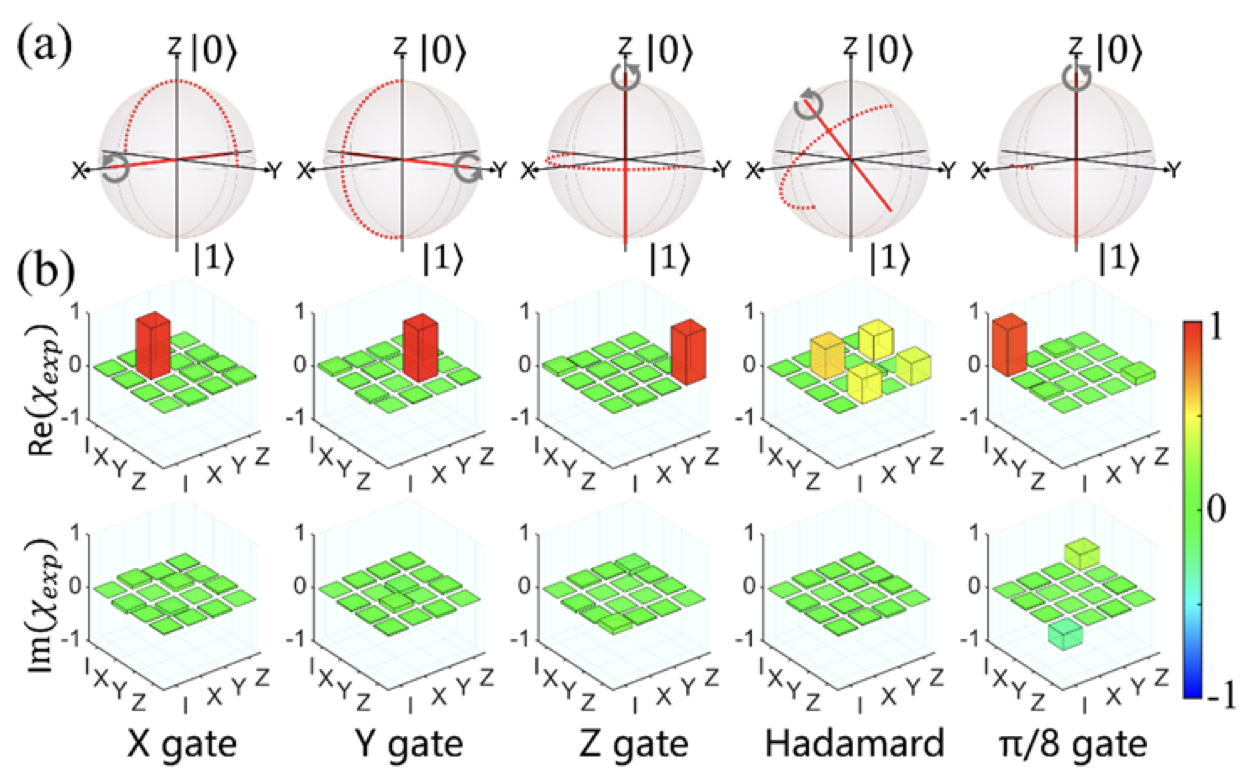
Figure 3. Experimental results of quantum gates. (a) Schematic of the quantum process. (b) Results of quantum process tomography.
Atomic transport and dynamics
In this experiment, the transport process of ultracold atoms in a moving optical lattice was studied, with a focus on the dynamical behavior of S-band and D-band atoms. Using a Shortcut method, ultracold atoms were rapidly loaded from a Bose-Einstein Condensate (BEC) into high energy bands of the optical lattice, and the optical lattice was accelerated by tuning the phase of the lattice beams. This acceleration generated an inertial force, causing the atoms to undergo Bloch oscillations, with the group velocities of the D-band and S-band atoms pointing in opposite directions. The experiment also prepared superposition states of S-band and D-band atoms. By adjusting the superposition weight, we achieved the regulation of the atomic group velocity from a positive to a negative direction, and observed quantum interference effects between different bands.
àRelated publication: Phys. Rev. A 107, 023303 (2023)
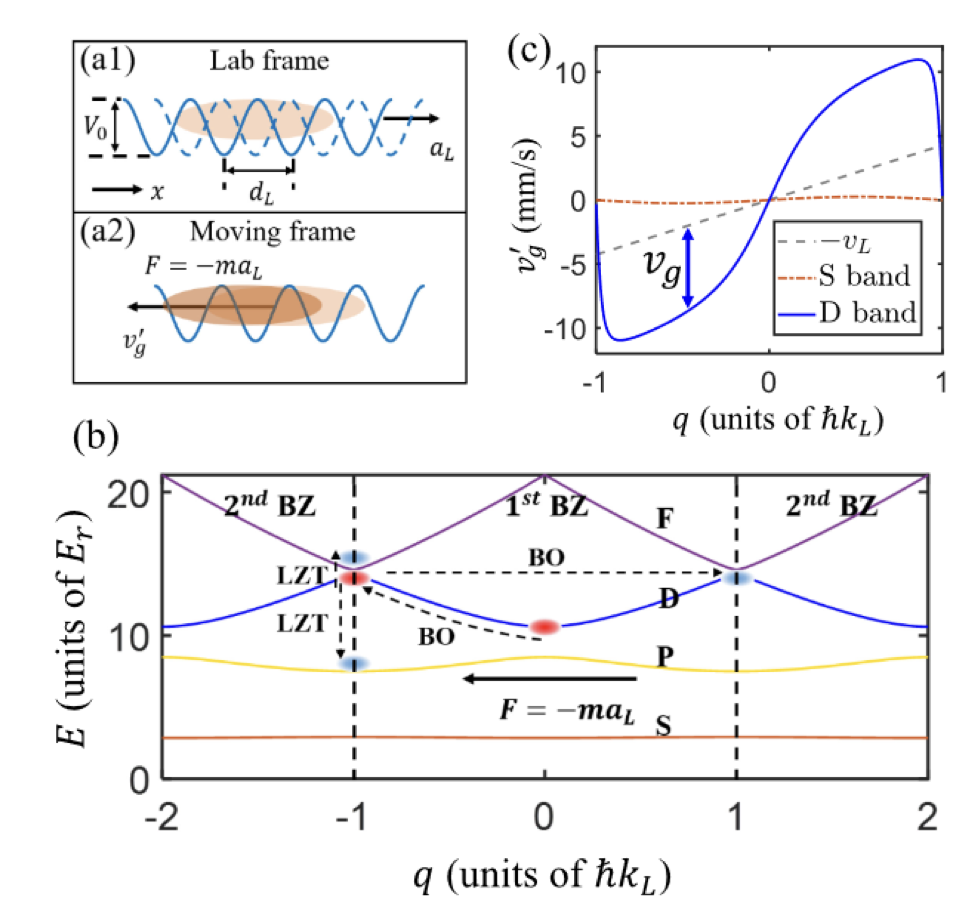
Figure 4: Transport process of atoms in a moving optical lattice.
Other Representative Publications:
1. Linxiao Niu, Shengjie Jin, Xuzong Chen, Xiaopeng Li, and Xiaoji Zhou. Observation of a Dynamical Sliding Phase Superfluid with P-Band Bosons, Phys. Rev. Lett. 121, 265301 (2018).
2. Tangyou Huang, Zhongcheng Yu, Zhongyi Ni, Xiaoji Zhou, and Xiaopeng Li, “Quantum force sensing by digital twinning of atomic Bose-Einstein condensates,” Communications Physics 7, 172 (2024).
3. P. Tang, X. Dong, W. Zhang, Y. Li, X. Chen, X. Zhou. Implementation of a double-path multimode interferometer using a spinor Bose-Einstein condensate, Phys. Rev. A 101, 013612 (2020).
4. Xinxin Guo, Zhongcheng Yu, Peng Peng, Guoling Yin, Shengjie Jin, Xuzong Chen, and Xiaoji Zhou. Dominant scattering channel induced by two-body collision of D-band atoms in a triangular optical lattice. Phys. Rev. A 104, 033326 (2021).
5. Hongmian Shui, Chi-Kin Lai, Zhongcheng Yu, Jinyuan Tian, Chengyang Wu, Xuzong Chen, and Xiaoji Zhou, Optimal lattice depth on lifetime of D-band ultracold atoms in a triangular optical lattice, Opt. Express 31, 26599-26609 (2023).